How Often Should You Replace Your Rugby Ball?
At Gilbert, we have always believed the ball is the heart of the game. It is the one piece of kit that every player touches in every session, from the first warm-up pass on a Tuesday night to the last kick of a Saturday fixture. Because it works so hard, it is easy to forget that a rugby ball does not last forever.
So how often should you replace yours? There is no fixed date on the calendar. How long a ball lasts comes down to three things: how often it is used, what it is used on and how well it is looked after. Here is how to read the signs, and how to get the most out of every ball in your bag.
1. Why Rugby Balls Wear Out
Every pass, kick, carry and knock-on takes a little out of a ball. The surface grip slowly wears smooth, the seams take strain with every impact and the bladder works hard to hold its pressure through changing temperatures.
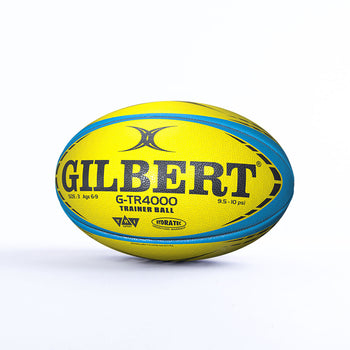
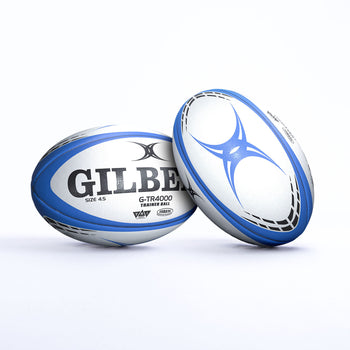
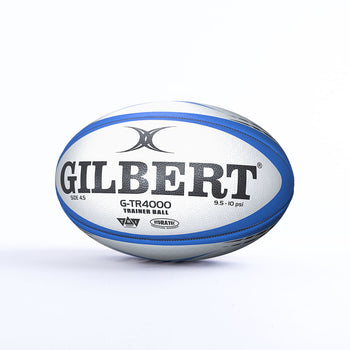
Playing surface makes a big difference. Soft grass is relatively kind, while abrasive 4G and artificial pitches wear grip down far more quickly. Then there is the weather. Wet, muddy sessions week after week test even the toughest ball, which is why every Gilbert training ball features Hydratec technology, with waxed coated threads that help seal the seams and reduce water absorption.
2. Match Balls vs Training Balls
Match balls and training balls are built for different jobs, so they age differently.
Match balls carry a higher concentration of natural rubber for elite grip and are designed to perform when the result is on the line. That premium grip is exactly what wears first, so many clubs keep their match balls for game day and team run-throughs only.
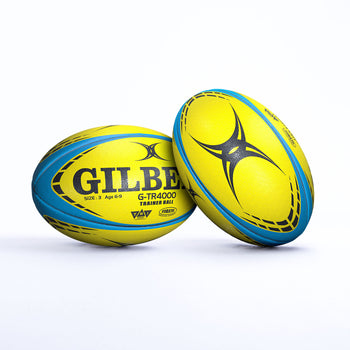
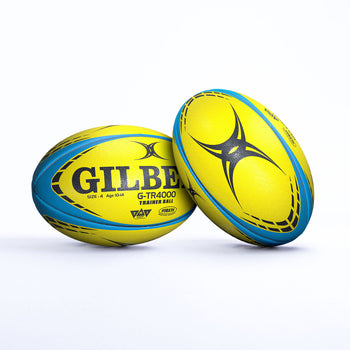
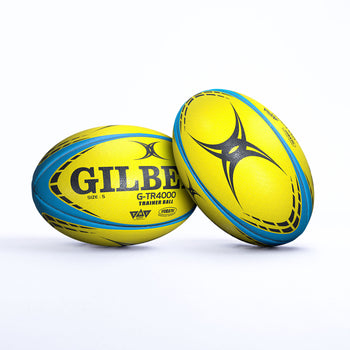
Training balls are built for volume. They are made to survive repetitive drills on every surface, session after session. As a rule of thumb, a training ball used several times a week will usually give you a full season of hard work if it is cared for properly. A match ball that has lost its edge often still has plenty of life left as a training ball, so moving older match balls down into the training bag is a smart way to get full value from them.
Not sure which ball suits your level? Our Rugby Ball Buyers Guide walks you through size, level and surface.
3. Six Signs It Is Time for a New Ball
Rather than counting weeks, look at the ball itself. If you spot any of these, it is time to think about a replacement:
- The grip has gone smooth. If the pimples have worn flat and the ball feels slippery, especially in the wet, handling will suffer.
- It has lost its shape. A ball that has gone lopsided or rounder will not fly true off the boot or spiral cleanly from the hand.
- It will not hold air. If you are pumping it up before every session and it is soft again by the end, the bladder or valve is likely failing.
- The seams are splitting. Loose or broken stitching lets water in and weakens the structure of the ball.
- It feels heavier than it should. A ball that has absorbed water over time becomes a soggy weight, which affects passing and kicking.
- The surface is cracked or peeling. Once the outer layer starts to break up, the ball will deteriorate quickly.
4. How to Make Your Rugby Ball Last Longer
A little care goes a long way. Follow these simple steps and your ball will stay in better condition for longer:
- Clean it regularly. Use a soft cloth, a light detergent and warm water to remove mud and residue before training or a match. This keeps the grip in its best condition.
- Inflate to the right pressure. All Gilbert balls should be inflated to 9 to 10 psi, with 9.5 to 10 psi recommended for match balls. Check the pressure before every use, as temperature changes can affect it.
- Use a hand pump. Always inflate with a manual pump such as a stirrup pump, never a compressor or airline, as over-inflation can permanently damage the shape and performance of the ball. Moisten the needle before use to protect the valve.
- Store it dry. Even though our balls are built for wet weather, leaving one in a damp kit bag lets water build up inside over time. Dry it off after a wet session and keep it somewhere dry.
- Rotate your balls. Sharing the workload across a set of balls, rather than hammering one or two, means they all last longer.
For the full rundown, take a look at our Rugby Ball Care Guide, and make sure you have a reliable pump in your kit bag.
[carousel]
5. Advice for Clubs, Schools and Coaches
If you are responsible for a ball cupboard, a quick audit at the start of each season and again at the halfway point is the easiest way to stay on top of things. Sort your balls into three piles: game-ready, training only and ready to retire. Balls with worn grip but good shape can move down to training, while anything that will not hold air or has split seams should be replaced.
Keeping balls clearly separated by size also helps. Our G-TR training ranges use different colours for different sizes, making it simple for coaches to grab the right ball for each age group.
When it is time to restock, our training ball range is built to take the punishment of weekly sessions, and our club multi-buy bundles make it easier to kit out a whole squad.
6. The Final Whistle
There is no single answer to how often you should replace your rugby ball, but the ball will always tell you when its time is up. Keep an eye on the grip, the shape and the pressure, look after it between sessions and it will look after you on the pitch. When it finally does need retiring, make sure the next one is built for your level, your surface and your season.
Ready to find your next ball? Shop the full Gilbert rugby ball range now.
Keep Reading
Enjoyed this? Take a look at more from the Gilbert Rugby News Hub: